
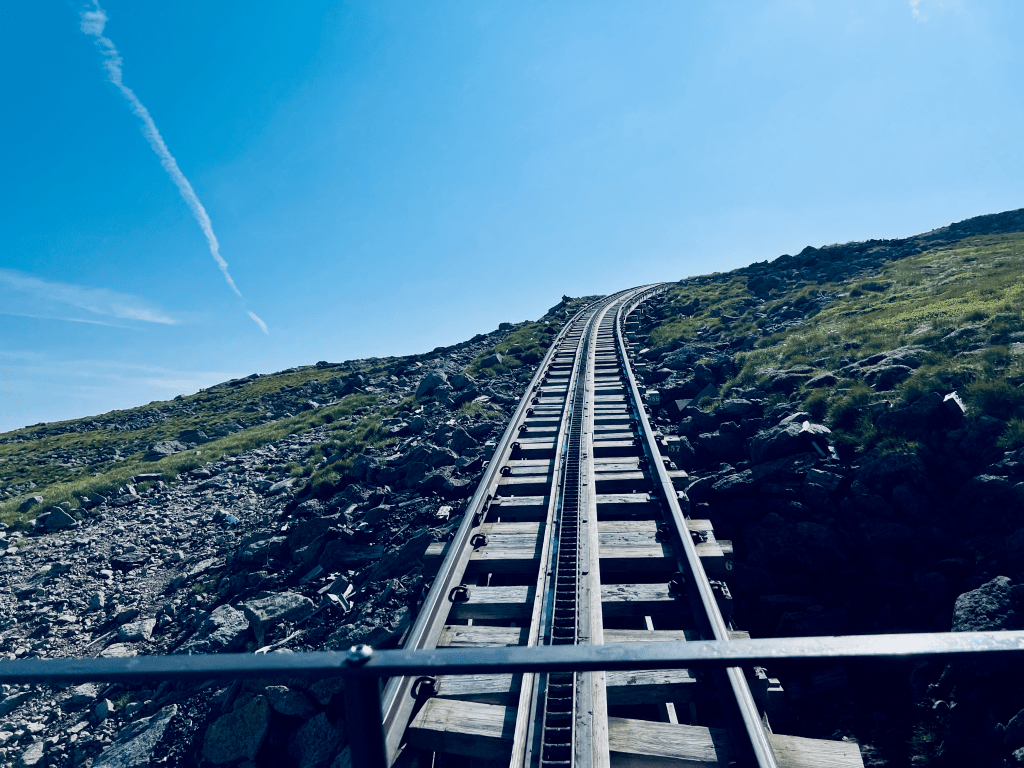
For a century and a half, riders have ascended Mt. Washington in a train the size of a street car.
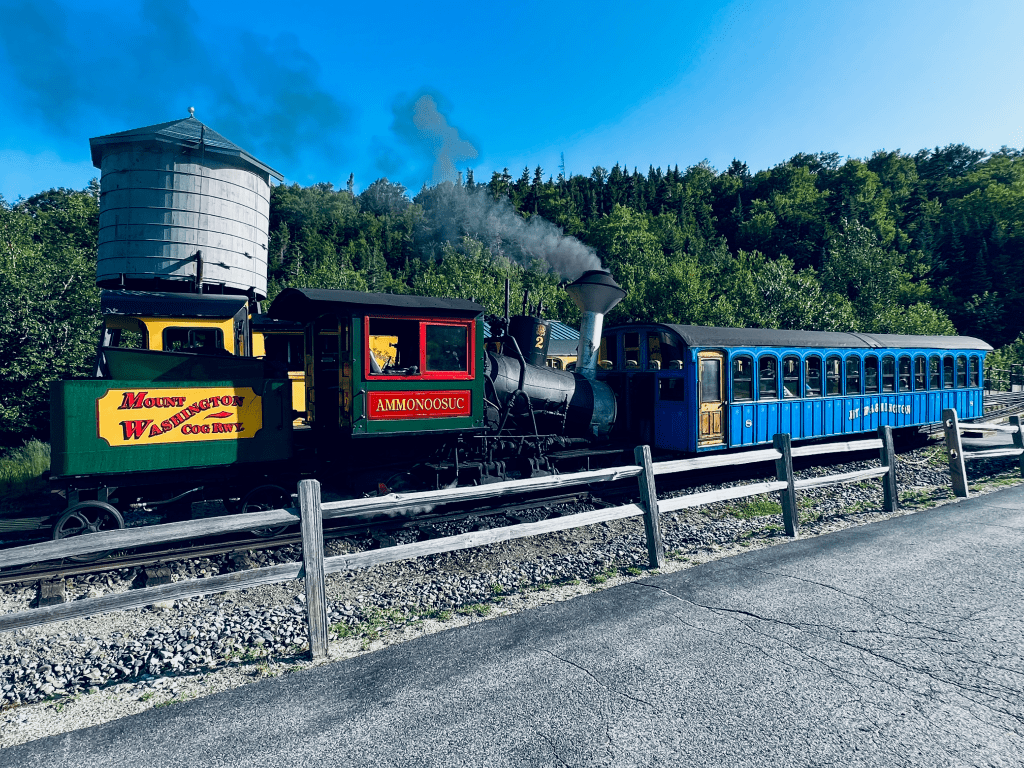
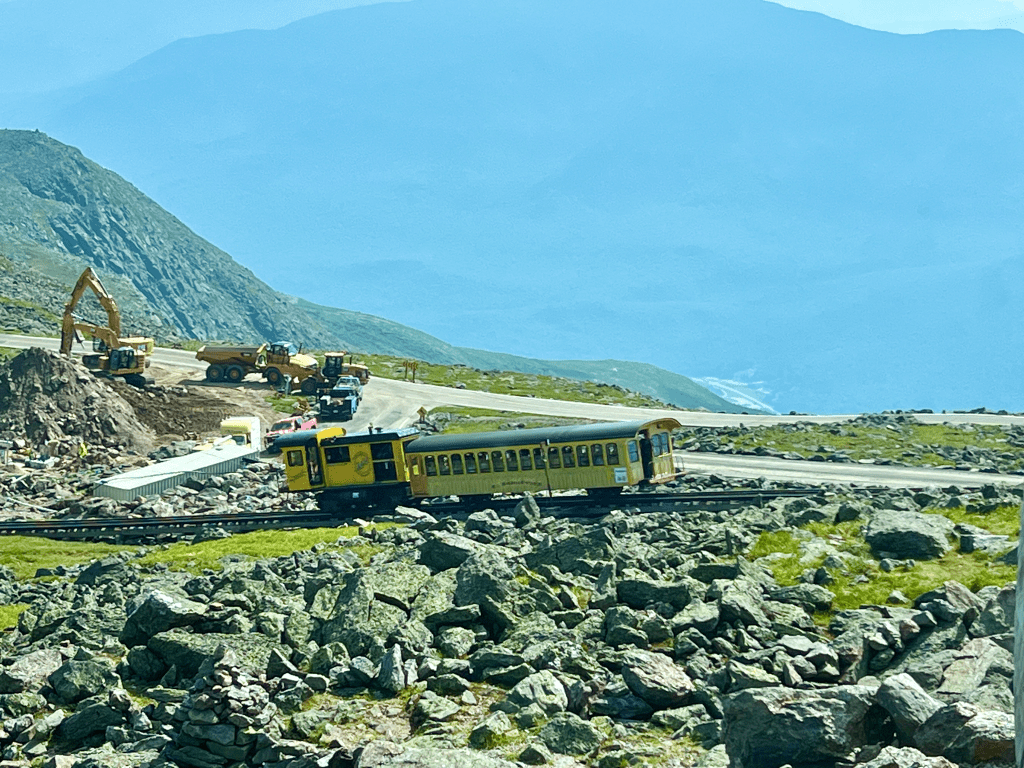
There are two things they don’t tell you about the Cog Railway in New Hampshire: First, there’s the smell: Some of the locomotives burn coal, which fills the passenger car with the aroma of industrial smoke. Others use biodiesel, which is less odiferous, but that’s not the one you take up the mountain. You don’t have a choice, this summer day on Mt. Washington, but you prefer it this way; this engine is closer to the ones used in 1869, when the narrow-gauge railroad first hauled riders to the summit.
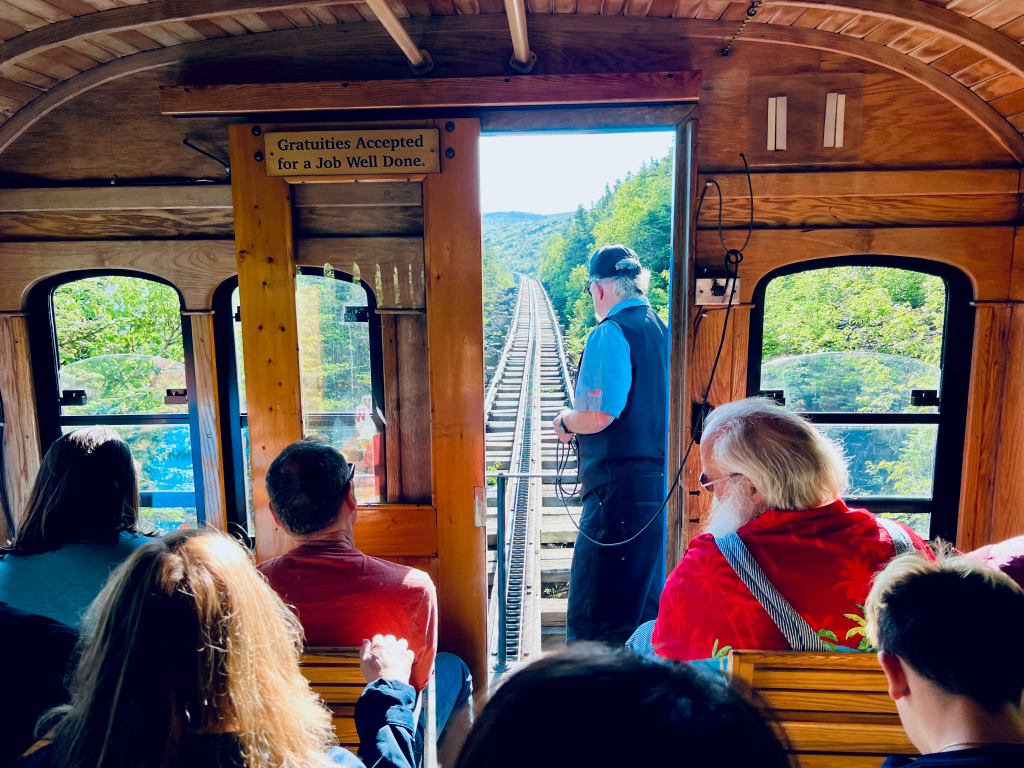
Second: the pace. When the train jolts forward, it moves slowly—so slowly that people smirk, chuckle, trade glances. The climb occurs at about three miles per hour, only slightly faster than most humans walk (albeit on a flat surface). Sitting on a wooden bench, facing forward and leaning back, you watch the alpine scenery slide by at the speed of an airport escalator.
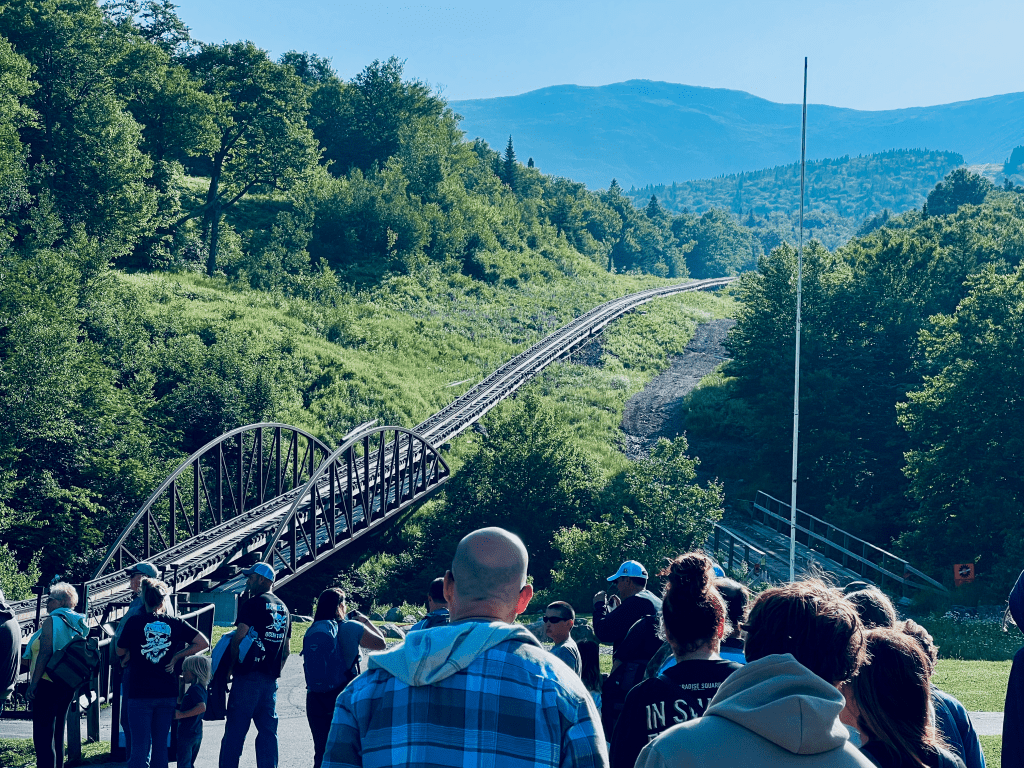
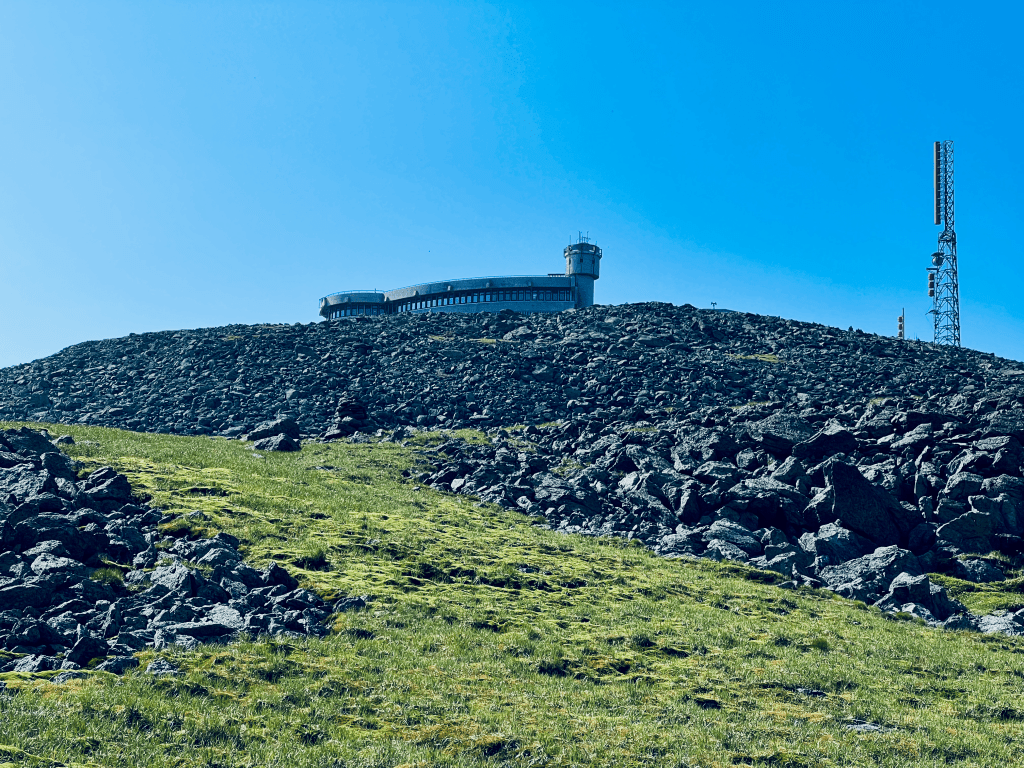
Still, you savor the trip. You imagine what this ride was like, for men in top hats and ladies in corsets, as a steam-powered engine nudged them over the tree line, toward the rocky, wind-battered peak. The Civil War had just ended when tourists started using (roughly) this same technology to admire the Presidential Range. Mountaineering was still a quirky pursuit in the 1860s, as brought to life in the Disney film Third Man on the Mountain. You once drove up the tallest mountain in New England—well, sat shotgun while a friend drove—but this experience is wholly different. Here, you’re riding through history, and for the most part, you see exactly what those Victorian travelers saw. And even now, the views are still a wonder, with beauty as old as the hills.
 You Are Here