
Field notes from box store expeditions.
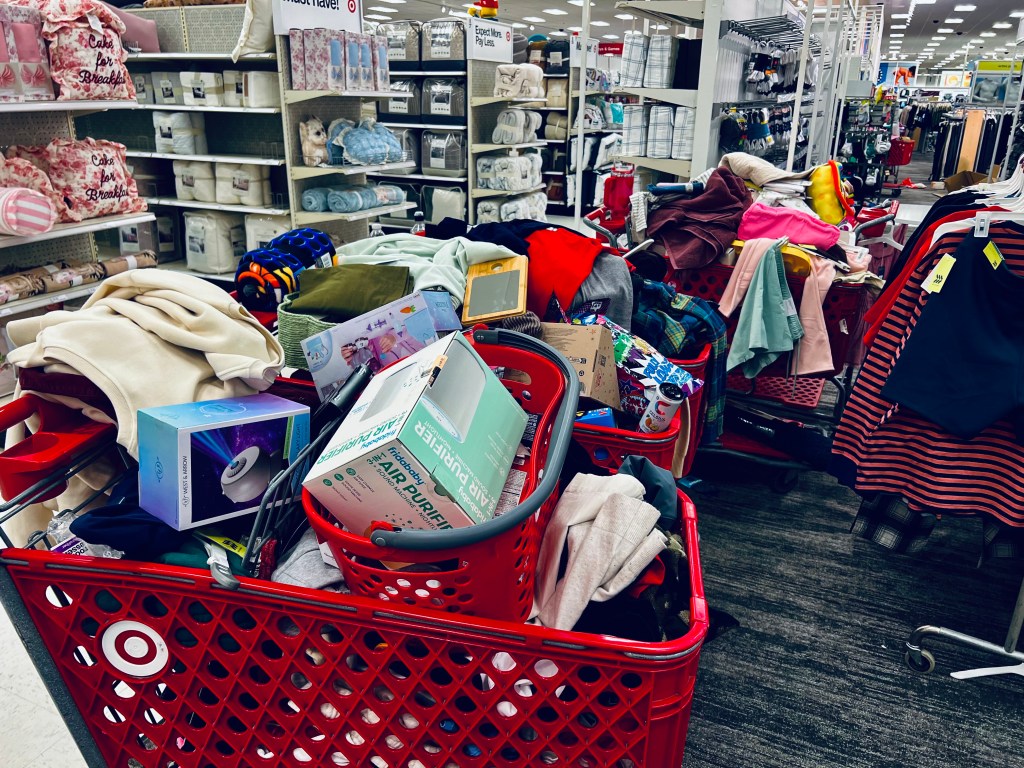
Carts are parked in the aisles, their baskets full of stuff. There’s no apparent order, just a mishmash of boxes, garments, packets, and tubes. The carts are arranged at odd angles, and all these objects—new, tagged, prêt-à-porter—are lying in piles or spilling over the sides. This doesn’t look like overstock, ready for sorting and shelving. Instead, the carts look like latticed red dumpsters.
Let’s be fair: You’ve never worked in retail. You’ve never stood for hours at cash registers, or searched for obscure items with cranky customers, or folded the same shirts for the hundredth time. You don’t blame the workers, who look evenly split between bored teens and Boomers who should have retired by now. External forces swirl all around: You assume their wages are low and their training lackluster. Amazon has pummeled suburbia. COVID used brass knuckles. Our consumerism has shifted; driving out here is rarely worth the price of gas or the headache of parking. The golden era—when suburbanites boasted of frequenting “Tar-ZHAY”—feels long over.
But you get this eerie feeling, as you search for a button-down shirt in your size: It’s grimmer than ever before. A thousand observations coalesce in your mind. Everywhere you look, you see the landscape of nihilism. Like a hooptie on blocks. A ship about to be scuttled. Suburban commerce has always been wasteful, but now it feels like an actual wasteland.
You think of the Best Buy clerk who refused to replace a missing component from your order and told you to call a number; the hotline rep who told you to just inquire at a Best Buy store; the customer-service feedback loop that resulted in nothing but a resolution never to shop at Best Buy again.
You think of the hours you recently spent at a shopping mall, visiting one clothier after another, and never once finding a salesperson to help you.
You think of the Staples cashier who had no idea where your UPS order was, and shrugged her shoulders, as if to say, Who could ever know where anything is?
Or the call-button you pressed at Walmart, in the hopes of unlocking a glass case, so you could buy a bike lock, and how 20 minutes elapsed before you just left.
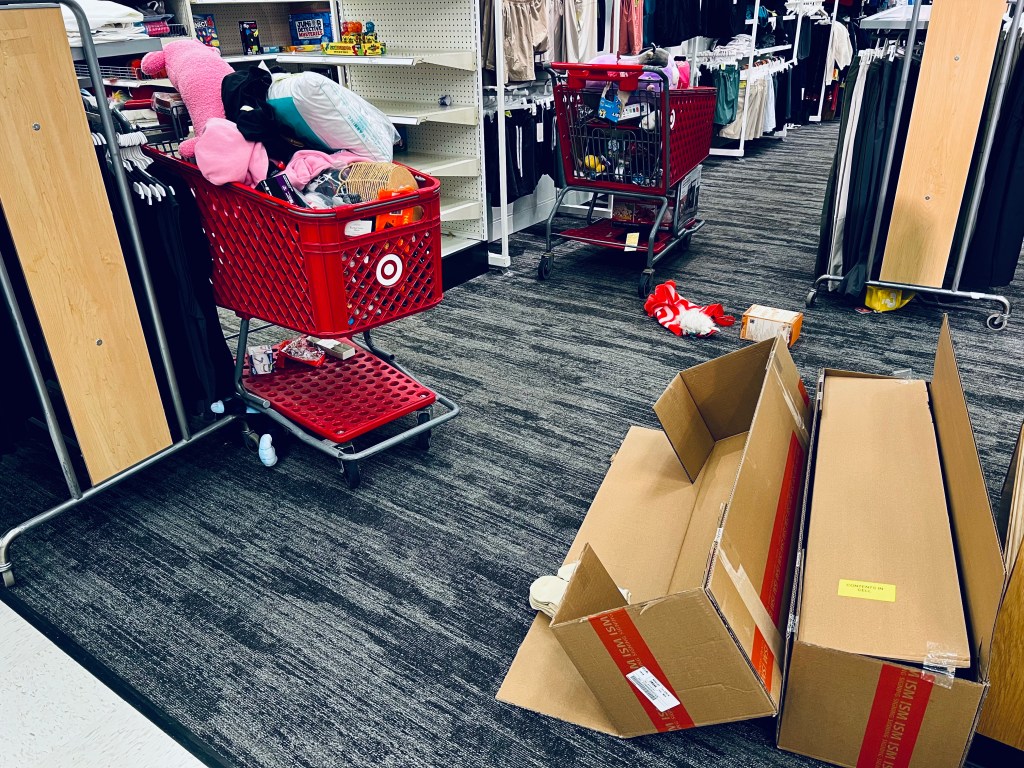
You don’t blame the workers. You know what crummy jobs are like. You remember the defeatist chitchat in break rooms, the unthinking numbness you felt over the course of eight (or more) hours doing something you hate. You know that most employees will rise to the occasion, if there is an occasion to rise to. The landscape itself seems to fall apart before your eyes. You spot customers chain-smoking in their idling cars; courtesy restrooms closed for months-long renovations; parking spots taken up by abandoned shopping carts; shipping boxes left in the middle of walkways; fast-food counters and pharmacy windows replaced by touch-screens; packages torn open, so patrons could shoplift a single granola bar or soup spoon. This feels like the 2020s in a nutshell, a vast economic universe collapsing in on itself, only to be replaced with warehouse cities and drone deliveries.
You recently finished reading a novel, also called You Are Here, by Karin Lin-Greenberg. The plot centers on a shopping mall in Albany, New York, which teeters on the edge of closure. The main characters struggle to exist there, cutting hair and serving fried chicken in a hollow old complex. Lin-Greenberg humanizes their slide toward irrelevance, the anxiety they feel, the things they wish they were doing with their lives, if only they knew how. Even an act of violence, right in the middle of the story, feels tragically on-point, in an era when CBS news dedicates an entire webpage to “mall shootings.”
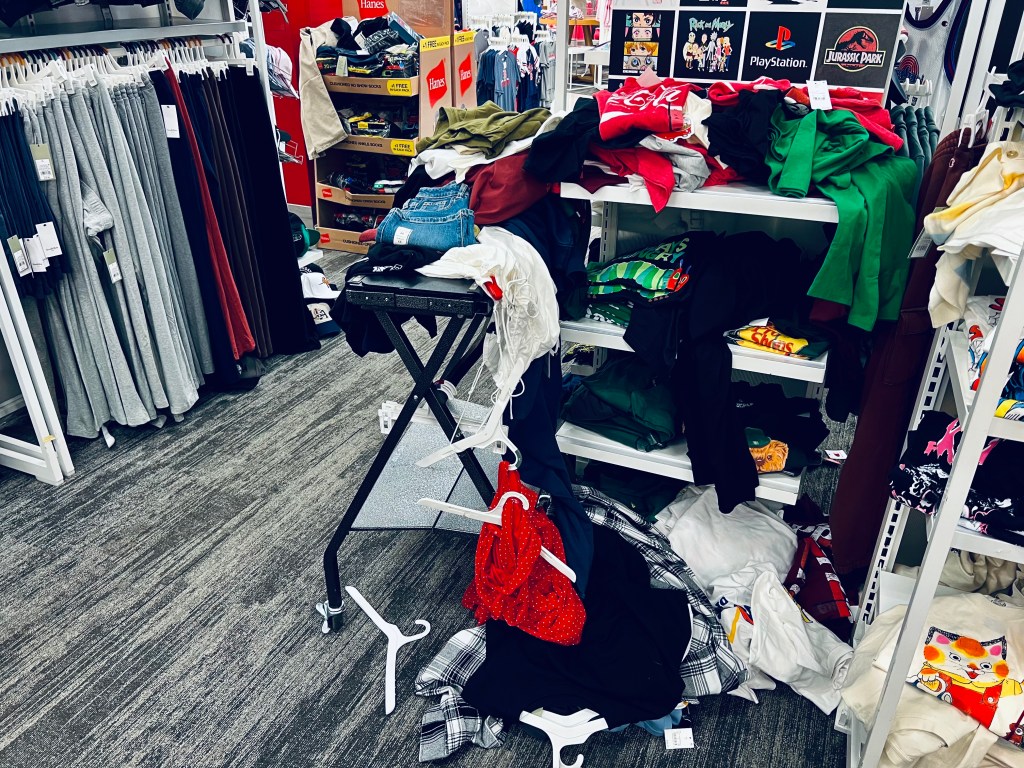
You never find a shirt, despite all the effort, gas, and wandering. You enter one fitting room after another, where mounds of discarded clothes lie on the floor.
Instead, you order one online. You try it on, look in the mirror, and sigh. It fits perfectly. You look at your reflection, and the future.
*
Related: The slow death of a once-beloved shopping mall in Indianapolis.
 You Are Here