
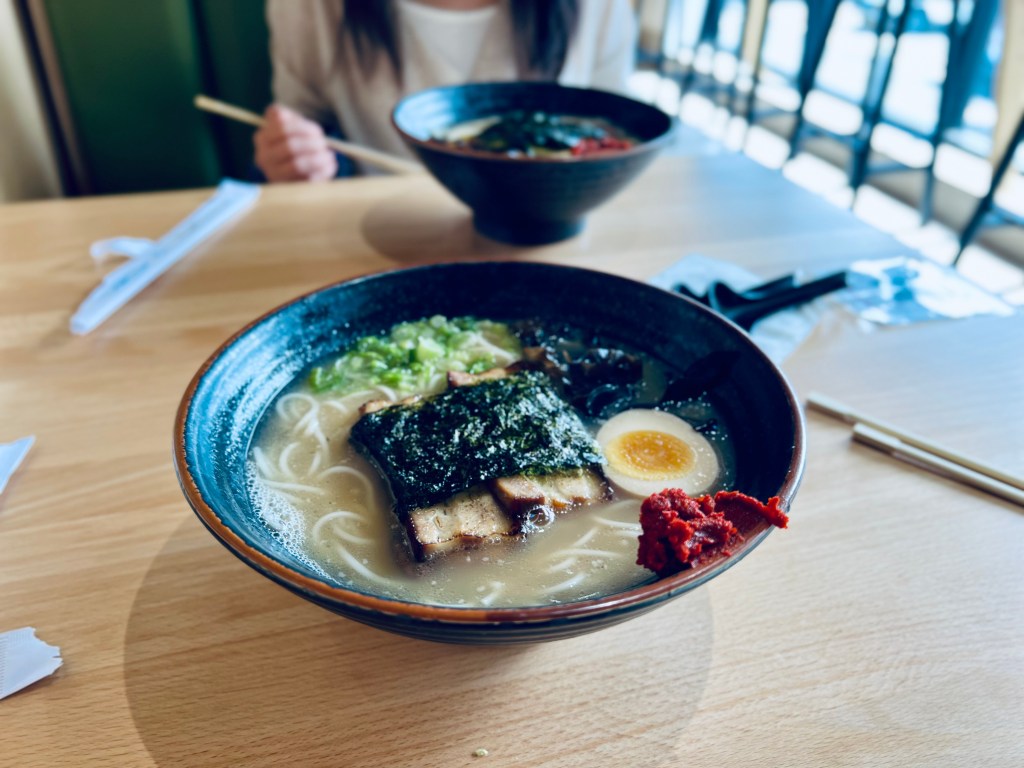
Cheap college grub or gourmet hipster lunch? Ramen noodles mean different things to different people.
You remember seeing your first packet of ramen, on the shelf at 7-Eleven, when you were a college freshman. You had no idea what it was—this lightweight brick, densely ridged beneath its plastic packaging. And why did it cost less than a dollar? Could you really zap it in the microwave? What was “Maruchan,” and what was with that drawing of a kid’s face in the logo’s corner?
Little did you know how much you would rely on instant ramen over the next four years. You cycled through chicken, beef, and shrimp flavors, mixing them with warm tap water and occasional bits of meat and vegetable. That was all ramen meant to you—something cheap, filling, and just tasty enough.
You also remember the first time you heard of a “ramen bar,” which you at first thought was a joke. Circa 2010. You pictured men in chefs’ hats crumbling dry noodles into empty bowls, then nuking them for two-or-so minutes. You had no idea how storied these places were in Japan, nor how quickly they’d take over U.S. neighborhoods, charging upwards of $20 for a single serving.
Today, you pine for gourmet ramen any day of the week, especially on gray winter afternoons. Nothing warms your soul like a steaming batch of noodles with strips of seaweed, tender pork, and a marinated hardboiled egg. Ramen is one of those savory meals you could slurp to the point of indigestion. Luckily, Providence has several ramen joints to pick from, your favorite being Wara Wara.
But every now and again you return from the supermarket, put away your purchases, and spot a couple of Maruchan packets at the bottom of a bag. You smirk at this.
Huh, you think. I wonder how those got there.
 You Are Here